
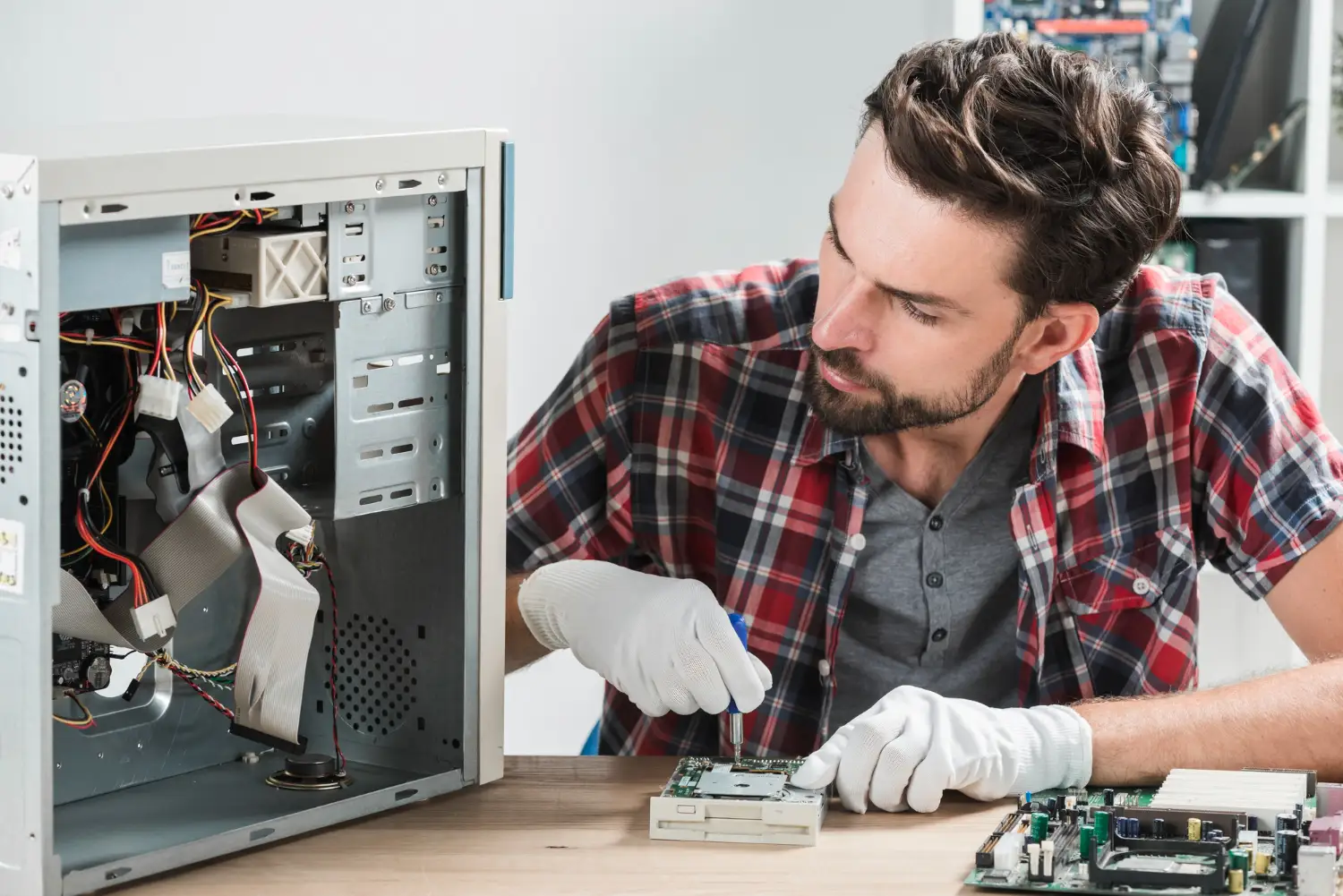
As laptops become central to work, learning, and business continuity, users are evaluating repair services differently. Speed, transparency, certified expertise, warranty support, and service accessibility are emerging as critical decision factors in modern device repair ecosystems.
Why Laptop Repair Choices Matter More Today
Laptops have evolved from optional productivity tools into essential infrastructure for work, education, communication, and daily operations. Across businesses, households, startups, and professional environments, device reliability now directly affects continuity, efficiency, and responsiveness.
As dependence on portable computing grows, even temporary laptop failures can disrupt workflows, delay projects, interrupt communication, and affect productivity.
This shift is changing how users search for computer laptop repair near me services.
What was once viewed as a simple technical fix is increasingly becoming a service decision built around trust, turnaround time, transparency, and long-term reliability. Users are no longer evaluating repair providers only on proximity or pricing. Increasingly, they are assessing expertise, support quality, warranty coverage, spare-part authenticity, and overall service experience.
The broader laptop repair ecosystem is therefore undergoing a quiet transformation. Repair is becoming less transactional and more service-oriented, especially in technology-driven urban environments where uptime matters.
The Rising Importance of Reliable Repair Ecosystems
The growing complexity of modern laptops has significantly changed repair expectations.
Devices now combine compact hardware architecture, tightly integrated components, brand-specific configurations, and increasingly sophisticated software dependencies. As a result, inaccurate diagnosis or poor-quality repairs can lead to recurring problems, reduced performance, or shortened device lifespan.
This is why the choice of repair center has become increasingly important.
A reliable repair provider is expected not only to resolve immediate hardware or software issues but also to preserve system stability, protect user data, and maintain long-term device performance. The repair experience itself is becoming part of the overall ownership lifecycle.
For users, the risks of choosing the wrong service provider are practical and immediate.
Poor repairs can increase downtime, create additional failures, or result in repeated servicing costs. In contrast, experienced repair ecosystems help extend device usability while reducing operational interruptions.
This growing awareness is influencing how users evaluate computer laptop repair near me options across both consumer and professional segments.
Reputation Is Becoming a Primary Trust Signal
One of the strongest recurring patterns in laptop repair selection is the growing role of reputation.
Users increasingly rely on customer reviews, ratings, and community feedback before choosing repair providers. Platforms such as Google, social channels, and local forums are becoming important indicators of service quality and reliability.
This reflects a broader behavioral shift.
Repair services operate within a trust-sensitive category because users often hand over critical work devices containing important personal, financial, educational, or business data. As a result, credibility becomes central to the decision-making process.
Word-of-mouth recommendations continue to hold importance because they provide reassurance around service consistency, professionalism, and problem resolution.
The emphasis on reputation also highlights another industry trend: users increasingly view repair services as long-term support relationships rather than one-time technical interventions.
Technical Expertise is No Longer Optional
Modern laptops require increasingly specialized repair capabilities.
Users now expect technicians to understand multiple brands, hardware architectures, operating systems, and component-level issues. Familiarity with devices from manufacturers such as HP, Dell, Lenovo, Acer, Asus, and Apple is becoming increasingly important in multi-brand service environments.
This growing emphasis on expertise reflects the technical realities of current devices.
Repair accuracy now depends heavily on diagnostic precision. Technicians must identify root causes quickly while avoiding unnecessary part replacements or incomplete fixes.
Certification, experience, and brand familiarity are therefore emerging as important differentiators within the laptop repair industry.
For users, technical competence directly affects repair confidence.
A well-trained technician is perceived not simply as someone capable of replacing components, but as someone able to preserve device functionality, maintain performance standards, and reduce the likelihood of recurring issues.
Transparency Is Becoming a Competitive Advantage
Another major shift in the repair ecosystem is the increasing importance of pricing transparency.
Users are becoming less comfortable with unclear repair costs, hidden charges, or vague service estimates. Instead, they increasingly expect detailed breakdowns covering labor, spare parts, diagnostics, and final pricing before approving repairs.
This reflects wider changes in customer expectations across service industries.
Transparency reduces uncertainty and builds trust, particularly in technical environments where users may not fully understand the complexity of repairs being performed.
Clear communication around pricing also changes the nature of customer relationships.
Rather than positioning repairs as unpredictable expenses, transparent service models help users feel more informed and in control of the process. This is especially relevant for SMBs, professionals, and enterprises managing multiple devices and operational budgets.
Free diagnostics and upfront cost estimation are increasingly becoming associated with service credibility rather than promotional value.
Speed is Now a Business Requirement
Turnaround time has emerged as one of the most important operational considerations in laptop repair.
In highly connected work environments, prolonged device downtime directly affects productivity. Delays can interrupt meetings, development cycles, customer communication, operational workflows, and educational continuity.
As a result, repair speed is increasingly viewed as a business necessity rather than a convenience feature.
Users now expect repair providers to balance speed with reliability. While complex issues may still require extended servicing windows, fast resolution for common problems is becoming an important expectation.
The pressure for quicker repairs also reflects how deeply laptops are embedded within daily professional routines.
Unlike earlier computing environments where devices were more stationary and interchangeable, modern workflows are often tied closely to individual laptops configured around specific user needs, files, software environments, and communication systems.
This dependency raises the operational value of efficient repair ecosystems.
Warranty Support Reflects Service Confidence
Warranty coverage on repairs and spare parts has become another major trust factor within the repair industry.
Users increasingly associate warranty-backed repairs with accountability and service quality. Repair providers offering coverage on replaced components and completed work are often perceived as more reliable and confident in their service standards.
This trend reflects practical concerns around repeat failures and repair durability.
A warranty does more than reduce financial risk. It signals that the repair provider stands behind the quality of both labor and replacement parts.
For businesses and professional users, warranty support also contributes to operational predictability by reducing uncertainty around future servicing costs.
The growing importance of warranties highlights how laptop repair is gradually shifting toward service assurance models rather than one-time repair transactions.
Spare Part Quality Is Under Greater Scrutiny
As users become more aware of long-term device performance, the quality of replacement components is receiving greater attention.
Reliable repair centers are increasingly expected to source high-quality or original spare parts to maintain system stability and compatibility after repairs.
This matters because low-quality components can create recurring issues, reduce device performance, or shorten hardware lifespan.
Battery replacements, display repairs, keyboards, charging ports, and internal hardware components all directly affect user experience after servicing. As a result, spare-part authenticity is becoming closely tied to repair credibility.
The emphasis on component quality also reflects a broader user preference for sustainability and device longevity.
Rather than replacing laptops entirely, many users are increasingly exploring repair and maintenance as practical strategies for extending usable device life.
Convenience is Reshaping Repair Services
Another important trend within laptop repair services is the growing focus on accessibility and convenience.
Pick-and-drop services, home repair options, and remote coordination are increasingly becoming part of the modern repair experience. These services reduce logistical friction for users who may not have time to visit service centers physically.
This shift reflects changing customer expectations shaped by broader digital service ecosystems.
Users increasingly expect support services to adapt around their schedules rather than requiring operational disruption. Convenience-driven repair models are especially relevant in large urban environments where travel time and work commitments can complicate service visits.
Home-service models also reveal how repair ecosystems are becoming more customer-centric.
Instead of limiting support to workshop environments, repair providers are increasingly extending service accessibility directly into residential and professional spaces.
Location Still Matters, But Differently
Physical presence remains important within laptop repair ecosystems, but its role is evolving.
Conveniently located service centers continue to matter because they reduce repair delays and improve accessibility. However, users now evaluate locations not only based on proximity, but also based on ecosystem relevance.
Repair centers positioned near technology hubs, commercial districts, or professional clusters may align more naturally with the needs of working professionals and businesses dependent on rapid service turnaround.
This reflects how repair infrastructure is increasingly connected to broader urban productivity patterns.
The goal is no longer merely finding the nearest repair center. Increasingly, users searching for computer laptop repair near me services are looking for repair ecosystems that combine accessibility, expertise, reliability, and operational convenience.
Laptop Repair is Becoming Part of Continuity Planning
The broader evolution of laptop repair reflects a larger shift in how devices are viewed within modern digital environments.
Laptops are no longer secondary tools. They now function as primary operational assets supporting communication, productivity, collaboration, and business continuity.
As a result, repair services are becoming part of a wider conversation around uptime, support reliability, lifecycle management, and operational resilience.
Users increasingly expect repair providers to deliver not only technical fixes, but also confidence, transparency, responsiveness, and continuity support.
This transition is changing the economics of repair itself.
The most valued repair ecosystems are no longer necessarily the cheapest. Increasingly, they are the ones capable of minimizing disruption, protecting device longevity, and delivering predictable service experiences.
The Future of Laptop Repair Will Be Service-Led
The laptop repair industry appears to be moving steadily toward service-centric operating models built around trust, accessibility, technical expertise, and operational efficiency.
As device dependence continues to grow across businesses, educational environments, and professional workflows, users will likely place even greater emphasis on reliability, communication quality, and support assurance.
The future of repair may therefore depend less on fixing isolated technical issues and more on delivering integrated support experiences that align with modern digital lifestyles and business expectations.
In that environment, computer laptop repair near me is no longer just a local search query. It increasingly represents a search for dependable technology support capable of keeping users connected, productive, and operational without disruption.